

Blog
What Is an N95 Mask? Complete Guide to N95 Respirators & Protection

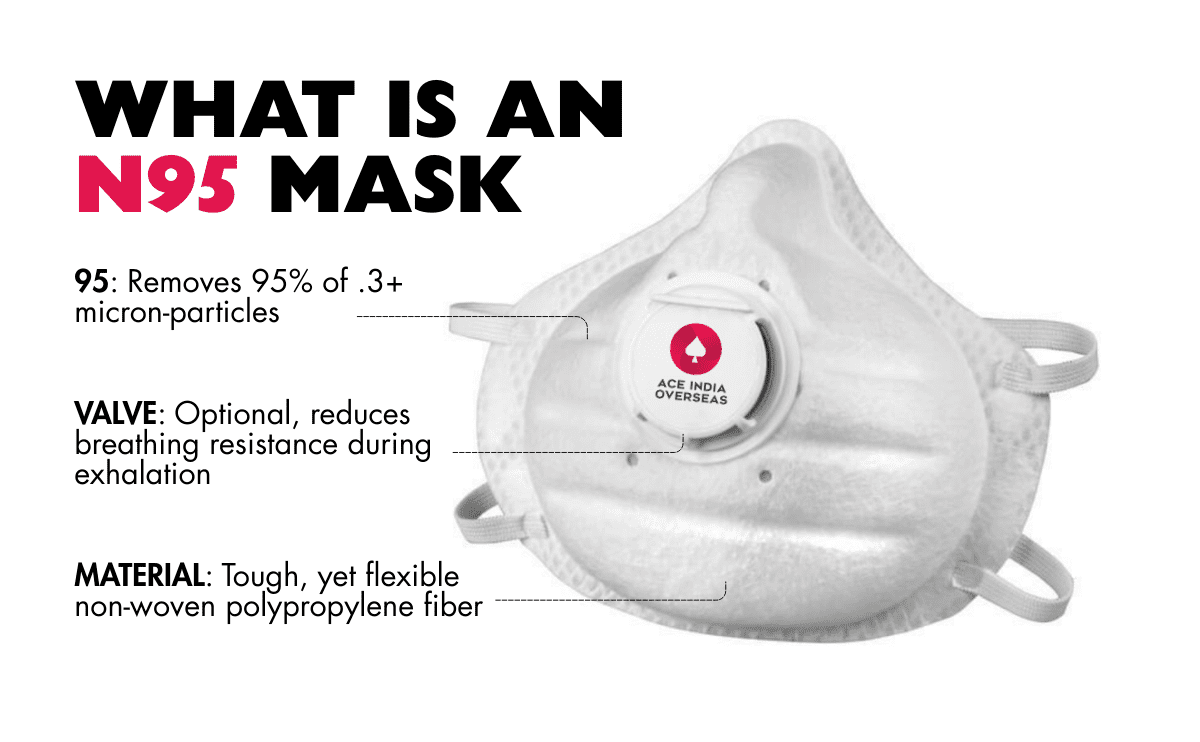
Demand for high-quality respiratory protection has increased significantly across healthcare, industrial, and public safety sectors. Masks that were once limited to medical professionals are now widely used in factories, laboratories, construction sites, and emergency response situations.
However, not all masks offer the same level of protection.
One of the most trusted and widely used respirators is the N95 mask. This guide explains what an N95 mask is, how it works, what the certification means, and when it should be used.
This article is part of our Respiratory Protection solutions designed for industrial and healthcare safety.
What Is an N95 Mask?
An N95 mask is a filtering facepiece respirator (FFR) designed to protect the wearer from airborne particles such as dust, fumes, mists, and biological contaminants.
Unlike cloth masks or basic surgical masks, N95 respirators are tested, regulated, and certified to provide a tight facial seal and high filtration efficiency.
N95 masks are widely used in:
Healthcare & hospitals
Industrial manufacturing
Construction & mining
Laboratories & cleanrooms
Emergency rescue & disaster response
What Does “N95” Mean?
“N” – Respirator Rating Letter
The letter N stands for Non-Oil resistant.
This means:
The respirator is suitable when oil-based aerosols are not present.
Other respirator ratings include:
R – Resistant to oil (up to 8 hours)
P – Oil-proof
For most medical and industrial environments, N-series respirators are sufficient and widely recommended.
“95” – Filtration Efficiency
The number 95 indicates that the mask filters at least 95% of airborne particles under controlled test conditions.
For comparison:
N95 → 95% filtration
N99 → 99% filtration
N100 → 99.97% filtration (HEPA-level)
This high efficiency makes N95 masks suitable for high-risk environments.
Why Is 0.3 Micron Important?
N95 masks are tested against particles as small as 0.3 microns, which are among the most difficult particles to filter.
These include:
Dust and fine particulates
Aerosols and mists
Large respiratory droplets
According to guidance from the Centers for Disease Control and Prevention (CDC), particles at or above this size are effectively blocked when the respirator is worn correctly and fits properly.
Material Used in N95 Masks
The core filtration layer of an N95 mask is made from electrostatic non-woven polypropylene fiber.
This advanced material:
Traps particles mechanically
Uses static charge to attract microscopic contaminants
Allows airflow without excessive breathing resistance
This balance of high filtration + breathability is what separates N95 masks from ordinary face coverings.
N95 Masks With Valve vs Without Valve
Some N95 masks come with an exhalation valve.
Purpose of the Valve
Reduces breathing resistance during exhalation
Improves comfort during long usage
Reduces heat and moisture buildup inside the mask
Important Note
Valve-equipped N95 masks do not filter exhaled air, so they may not be suitable in sterile environments or where source control is required.
Where Are N95 Masks Commonly Used?
N95 respirators are ideal for:
Healthcare & infection control
Chemical & pharmaceutical plants
Construction & demolition work
Laboratories & research facilities
Firefighting & emergency rescue
Industrial maintenance operations
Why Choose Certified N95 Respirators?
Certified N95 masks are:
Tested for filtration efficiency
Designed for a proper face seal
Reliable for occupational safety compliance
At Ace India Overseas, we supply genuine respiratory protection products from trusted global manufacturers to meet industrial and healthcare safety needs.
Explore our complete range of Personal Protective Equipment (PPE) for hazardous environments.
What is an N95 mask used for?
N95 masks are used to protect against airborne particles, dust, aerosols, and biological contaminants in medical and industrial environments.
Is an N95 mask better than a surgical mask?
Is an N95 mask better than a surgical mask?
Can N95 masks be reused?
Some N95 masks can be reused under controlled conditions, but reuse depends on contamination level and manufacturer guidelines.
What does the valve on an N95 mask do?
The valve reduces breathing resistance during exhalation, improving comfort during long wear.
Are N95 masks certified?
Yes. Genuine N95 respirators are certified and tested as per occupational safety standards.