
Blog
What Is a PAPR? A Complete 2025 Guide to Powered Air-Purifying Respirators

Respiratory protection has gone far beyond simple face masks. As industries across the world adopt stricter safety standards, one product is becoming essential in high-risk environments PAPR, or Powered Air-Purifying Respirator.
Whether you work in pharmaceuticals, cleanrooms, laboratories, chemicals, semiconductor manufacturing, or heavy industry, understanding PAPR is no longer optional.
This guide gives you a clear, expert-level, but easy-to-understand breakdown of what PAPR is, how it works, and why global companies trust it for maximum protection.
What Is a PAPR?
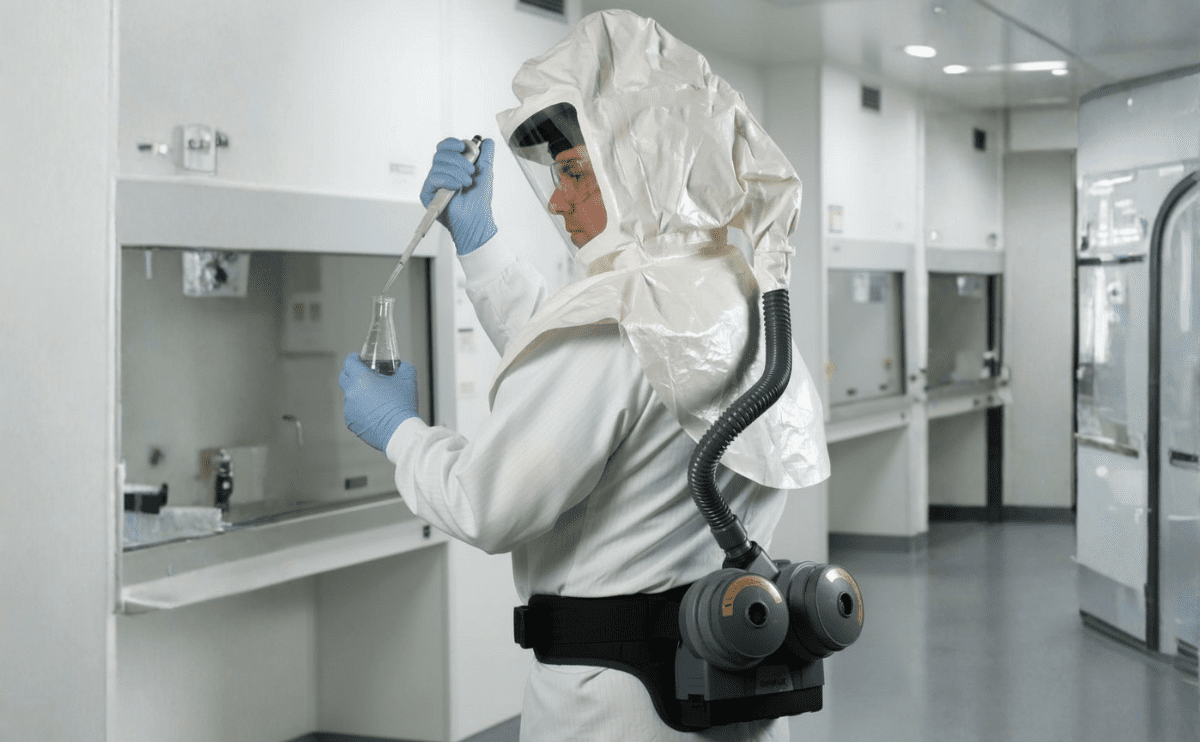
A Powered Air-Purifying Respirator (PAPR) is an advanced respiratory protection system that uses a battery-powered blower to pull contaminated air through high-efficiency filters before delivering clean, breathable air to the wearer’s hood or facepiece.
In simple terms:
It gives clean air with positive pressure, without making you struggle to breathe.
This makes PAPR the preferred choice for:
Pharma manufacturing
Biotech & R&D
Oncology drug production
Chemical handling
Food processing
Cleanrooms (Grade A–D)
Laboratories & pathology
Welding & heavy metals
Healthcare & infectious disease control
This guide is part of our advanced Respiratory Protection solutions for industrial and hazardous work environments.
How Does a PAPR Work?
Every PAPR has three main components:
1. Blower Unit
A motor pulls in surrounding air and maintains positive pressure so contaminants cannot enter.
2. Filters or Cartridges
Depending on the environment, these can be:
HEPA filters (for pharma & cleanrooms)
Gas/vapour cartridges
Combo filters
3. Headgear (Hood, Helmet, or Full Facepiece)
This delivers purified air and seals the respiratory zone.
The system continuously pushes filtered air, making breathing effortless, even during long work shifts.
For global best practices, NIOSH provides detailed guidance on Powered Air-Purifying Respirators.
Why Is PAPR Important Globally in 2025?
Global safety norms (Europe, US, GCC, Asia-Pacific) now demand higher respiratory protection because:
Industries deal with potent chemicals
Oncology drugs (cytotoxics) are increasing
Viral outbreak preparedness
Cleanroom contamination control
Worker comfort & productivity issues
PAPR reduces fatigue by 40–60% compared to N95 or full-face respirators, according to multiple global studies.
Why Are Indian Pharma & Manufacturing Companies Moving Rapidly to PAPR?
India’s pharmaceutical sector is becoming the world’s third-largest producer. With global clients auditing Indian plants, compliance demands are increasing.
Indian companies are adopting PAPR because:
US-FDA / EU guidelines require superior respiratory safety
Oncology & hormones manufacturing risks
Lower CO₂ buildup compared to N95 masks
Comfortable for 8–12-hour shifts
Reduced risk of inhalation exposure
Better worker productivity
Heat-friendly designs
Ace India Overseas is already supplying PAPRs to leading Indian pharma plants.
In India, respiratory protection equipment such as PAPRs is governed by industrial safety guidelines issued by DGFASLI.
PAPR vs N95 vs Full-Face Respirator
| Feature | PAPR | N95 Mask | Full-Face Respirator |
|---|---|---|---|
| Breathing effort | Very low (blower-assisted) | High | Medium |
| Protection level | Highest | Medium | High |
| Long shift comfort | Excellent | Poor | Medium |
| Suitable for chemicals | Yes (with cartridges) | No | Yes |
| Cleanroom safe | Yes | Limited | Limited |
Winner for industrial & pharma use: PAPR ✔️
Where Is PAPR Needed the Most?
Pharmaceutical & API plants
Oncology drug production
Sterile manufacturing
Chemical plants
Labs & research centers
Vaccine production
Biotechnology
Semiconductors
Food processing
CNC, welding, grinding
Refractory & mining
Types of PAPRs
1. Hooded PAPRs
Full head & shoulder protection. Ideal for:
Pharma, cleanrooms, chemical handling.
2. Helmet PAPRs
Hard-hat + respiratory protection.
Ideal for construction, mining, and heavy industry.
3. Full-Face PAPRs
High visibility + tight protection.
Ideal for welding, chemicals, and toxic environments.
Benefits of Using PAPR
Consistent clean airflow
High-level HEPA filtration capability
No inward leakage
Comfortable for long hours
Reduces fatigue
Protects against aerosols, fumes, and particles
Prevents moisture buildup
Better communication and visibility
Compatible with beard and spectacles
Explore our complete range of Personal Protective Equipment (PPE) designed for high-risk industrial applications.
Looking to Buy PAPR Systems?
Ace India Overseas supplies high-quality PAPR systems trusted by pharma and industrial clients across India and export markets.
Is PAPR better than N95?
Yes PAPR offers higher protection, powered airflow, and longer shift comfort.
Can PAPR be used in pharma cleanrooms?
Yes In fact, Grade A/B cleanrooms prefer hooded PAPRs with HEPA filters.
Does PAPR work for chemicals?
Yes when equipped with the right gas/vapor cartridges.
Can people with beards use PAPR?
Yes hooded PAPRs are beard-friendly.
How long does a PAPR battery last?
Typically 8–12 hours, depending on model and airflow settings.